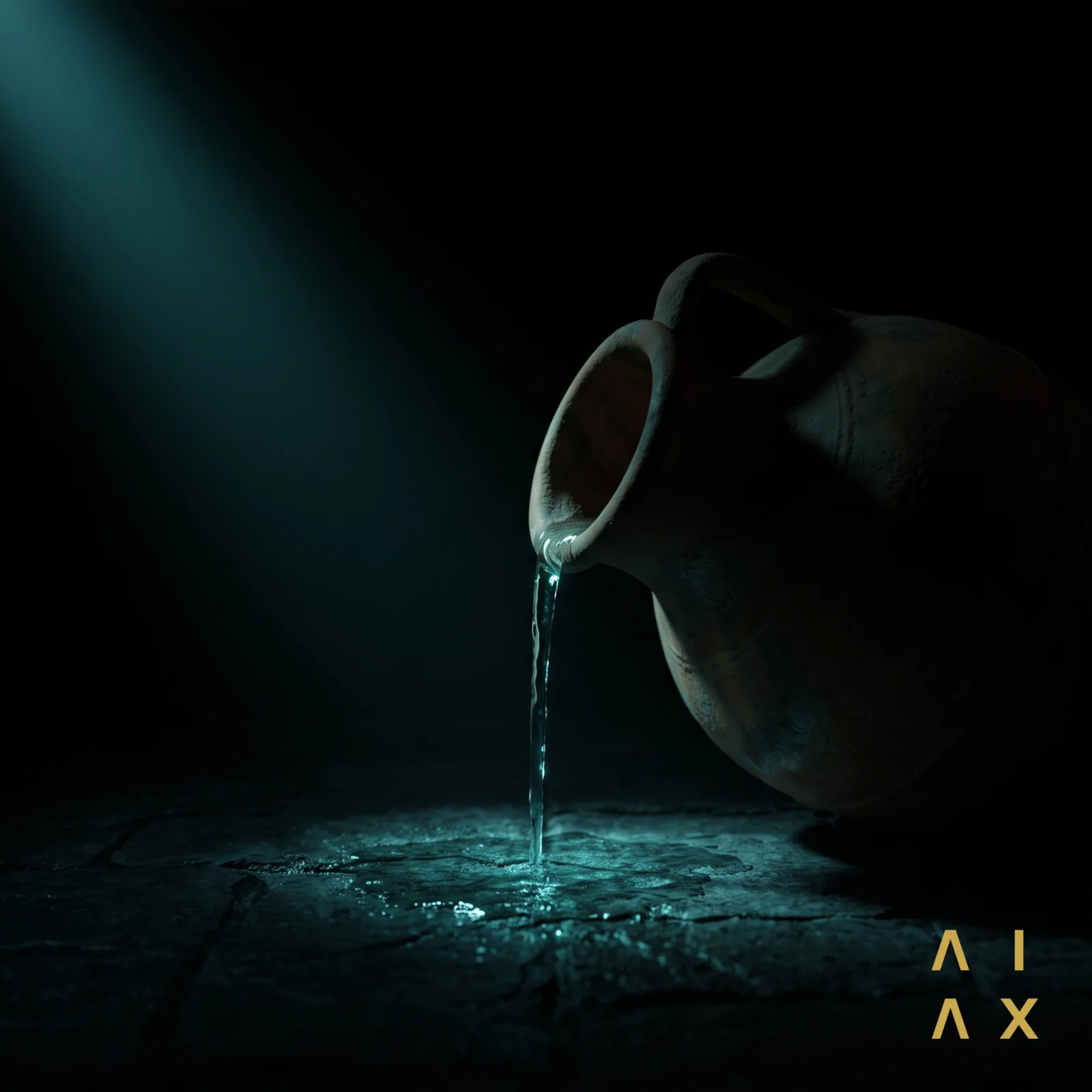
06 / 10 · AQUA
AESTUS
Greece · Lydian · 3:58
Epicurus taught that pleasure is the beginning and the end of a happy life, and then lived mostly on bread and water. A large study that tracked people's moods through their phones found they were happiest by the sea. — Epicurus *"τὴν ἡδονὴν ἀρχὴν καὶ τέλος λέγομεν εἶναι τοῦ μακαρίως ζῆν."* "We call pleasure the beginning and the end of the happy life." (Letter to Menoeceus)
Remember the first swim of the summer.
The cold shock at the knees, the hesitation, the moment you finally go under and come up gasping and laughing. Then the sun on wet shoulders, salt on your lips, the slow rocking of the water beneath you. For a few minutes you are not thinking about anything at all.
Epicurus would have called that a good moment, and he would have meant it seriously. Around 306 BC he bought a house with a garden just outside Athens and opened a school there, one of the few in the ancient world that admitted women and slaves. He taught that pleasure is the beginning and the end of a happy life. His enemies spread the rumour that the Garden was a place of endless feasting. In fact he lived mostly on bread and water, and once asked a friend to send him a small pot of cheese so that he might have a feast.
What Epicurus meant by pleasure was both simpler and harder than luxury. A body free of pain and a mind free of fear. Friends. Enough to eat. The ability to notice that right now, in this moment, you are perfectly all right.
A British study that asked thousands of people through their phones how happy they felt and where they were found that people were happiest by the sea, more so than in any other kind of landscape. Near the water, under an open sky, doing very little.
The wave does not ask permission. It arrives, lifts you, and moves on. That is enough.
We often treat moments like these as a break from real life, something to earn with work and then feel slightly guilty about. Epicurus saw it the other way round. The work is there to make room for them.
The summer sea is a good teacher in this. It asks for nothing, promises nothing and lasts only a few weeks. By September its warmth is gone. That is part of why it is so easy to be fully present in it.
AESTUS is that heat and that water: a body in the sun, the rhythm of the waves, and no thought heavier than the next swim.
— Epicurus, 341–270 BC
LYRICS
Instrumental — no lyrics.