10 / 20 · INTROITUS · LUX
AKT II — VIBRATIO
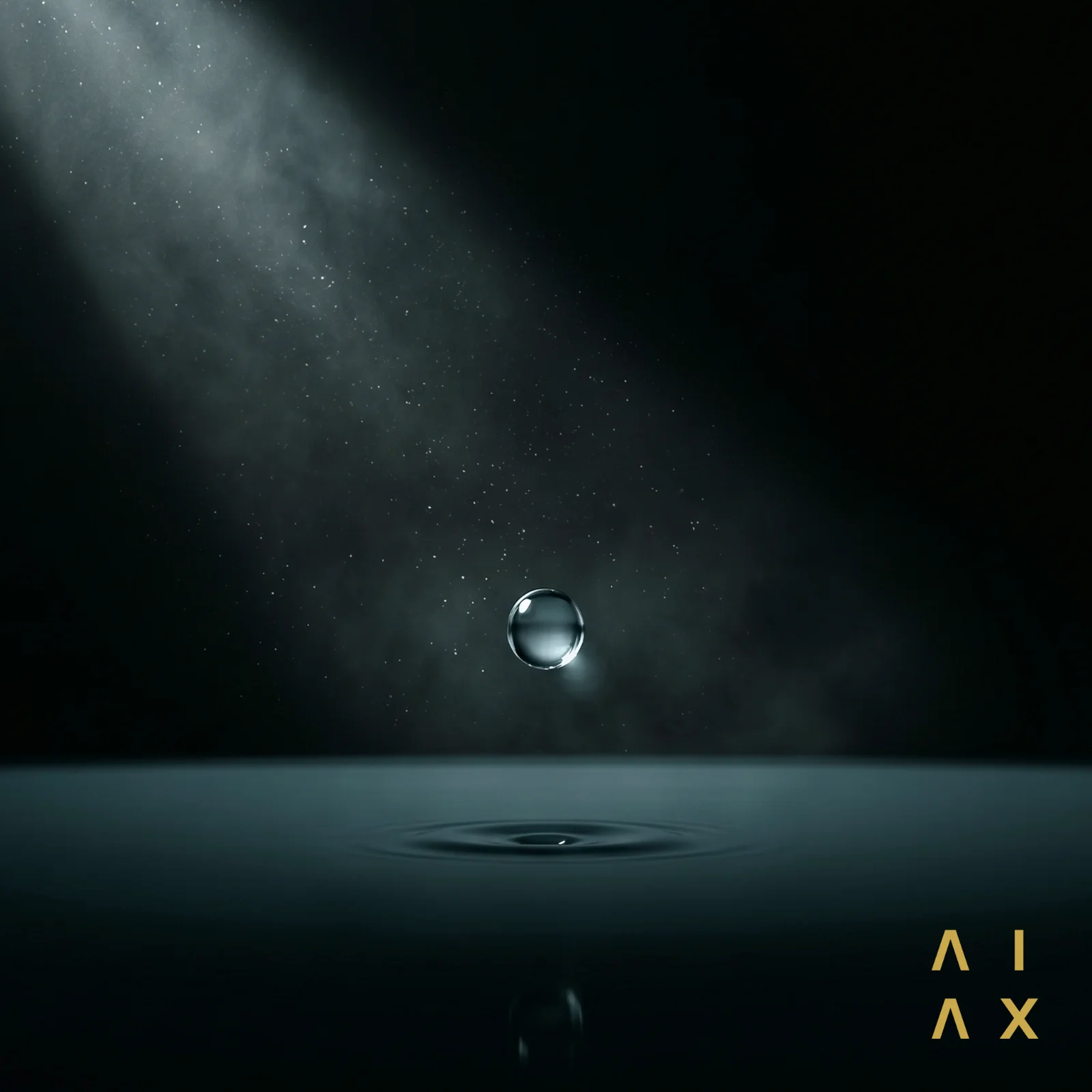
AQUA PURA
Rome · Lydian · 4:26
Thales said the first principle of everything is water. Two and a half thousand years later, biology confirmed it and we are still thirsty.
“ἀρχὴ τῶν πάντων ὕδωρ ἐστίν.”
“The first principle of all things is water.”
The last light before the dark.
Listen on Spotify ↗Also appears on
Turn on the tap. That is where western philosophy started.
Before Thales, knowledge was myth. The world was made by gods, held up by giants, sustained by rituals. Then, in the sixth century BC, a man from Miletus looked at the coast and asked a question no one had asked in the same way before: what is everything made of? His answer — water — sounds naive until you sit with it. Living things need water. Dead things dry out. Seeds will not grow without it. The weather, the sea, the rivers that shape the land — all water. Thales was not being metaphorical. He meant it physically. The first principle of everything is water.
It was the first sentence in the history of philosophy that was not a prayer.
Two hundred years later, Heraclitus took the idea further. He said you cannot step into the same river twice. Not because the river changes — because you do. The water is always different water, and you are always a different you. Identity itself is a flow. Nothing stands still long enough to be a "thing." We pretend otherwise because the pretending is more comfortable than the truth.
Water does not care whether you are ready. It keeps moving, and the things that were holding you keep loosening, and eventually you let go because the alternative is exhausting.
Six centuries after that, Seneca wrote about water again. He described standing beside a river and watching it carry away everything it touched. Semper fluit. It always flows. Not as tragedy. As fact. The Stoics found the idea consoling — if you cannot hold anything forever, you also cannot be obligated to. The grip loosens either way. You can fight it and be tired, or you can stop fighting and be carried.
The modern world forgot most of this. We drink bottled water and argue about it. We build dams and call ourselves in control. A single evening watching news from a flooded city reminds us we are not. Civilizations rise and fall along rivers. Your body is sixty percent water. The oldest parts of you are made of rain that fell before you were a thought. You do not own water. You are a temporary arrangement of it.
This is the knowledge Thales opened. Heraclitus deepened it. Seneca softened it. Modern biology confirmed it without ever quoting them. And still we stand at the tap and forget.
Aqua pura. Semper fluit. Vita venit. Pure water. Always flowing. Life comes. Three Latin phrases that could have been written yesterday, and were written two thousand years ago, and will be true in two thousand more.
AQUA PURA closes the first half of the record the way rivers close — by moving on.
— Thales, c. 624–546 BC; Heraclitus, c. 535–475 BC; Seneca, 4 BC – 65 AD
LYRICS
Aqua
Aqua pura
Semper fluit
Vita venit

Aqua pura

(Aqua pura)
(Aqua pura)

Aqua...
(Aqua)
Aqua...
(Aqua)
Aqua pura!

Aqua...
(Aqua)
Aqua...
(Aqua)
Aqua pura... Semper!

Aqua pura...
Semper fluit...

Aqua...
(Aqua)
Aqua...
(Aqua)
Aqua pura!

Aqua...
(Aqua)
Aqua...
(Aqua)
Aqua pura... Semper!

Aqua pura semper
Aqua...