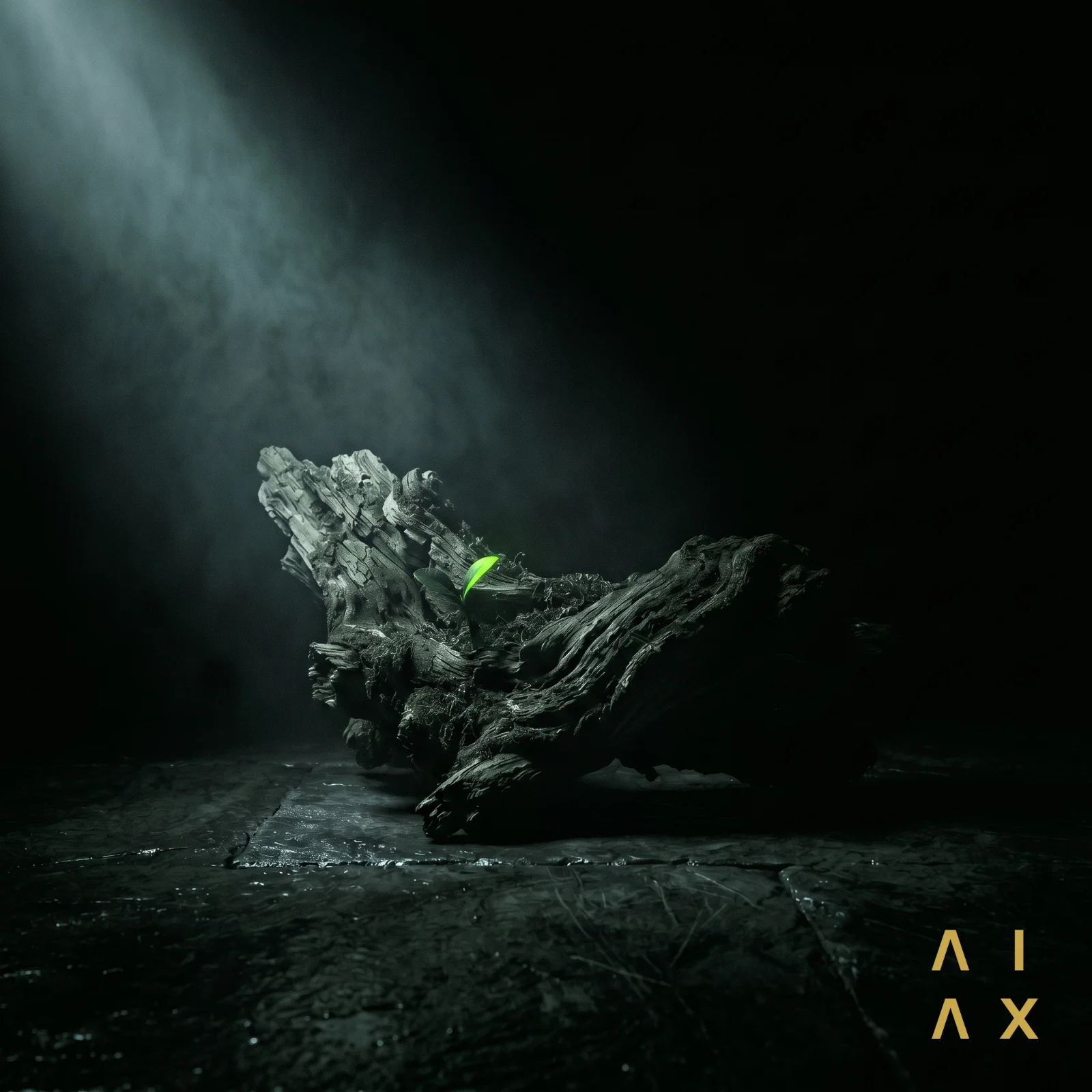
06 / 20 · INTROITUS · LUX
AKT II — VIBRATIO
SILVA
Celts · Dorian · 3:18
Heraclitus wrote that nature loves to hide. Walk into an old forest and you feel it — the sense of being seen by something that will not introduce itself.
“φύσις κρύπτεσθαι φιλεῖ.”
“Nature loves to hide.”
The memory of the earth.
Listen on Spotify ↗Also appears on
Walk into a forest that is old enough, and something happens that no one has explained in twenty-five centuries.
The sound changes. The air changes. The kind of thinking you can do changes. You become a little quieter, without deciding to. Children know this instinctively and whisper. Adults take longer to notice. Eventually, even the loudest person in the group runs out of things to say.
Heraclitus had five words for it. Physis kryptesthai philei. Nature loves to hide. The fragment has been translated a hundred ways — nature is inclined to conceal itself, the real tends toward the hidden, what is prefers to disappear. None of the translations is wrong, and none of them is right. Heraclitus wrote in Greek so dense that later philosophers called him The Obscure. He would have been pleased.
He lived in Ephesus in the sixth century BC. He gave up a position of public influence to go into the hills. He was not anti-social. He was saying something the hills kept saying and the city refused to hear: that reality does not announce itself. Reality hides in plain sight, inside things that look simple, and you have to slow down to meet it.
A forest is older than the language used to describe it. That is why we walk quieter inside one, and why we cannot explain why.
The Celts understood this without needing a fragment. They did not build temples. They had groves. The oak was sacred, the mistletoe was sacred, the spring under the root was sacred — and sacredness meant you did not cut, did not speak loudly, did not pretend to understand. The Romans thought this was primitive. The Romans built marble and filled it with statues and then walked into Celtic groves and fell silent too, because a grove is a thing a statue cannot argue with.
Silva. The Latin word for forest, but also for raw material, unshaped stuff, what has not yet been made into something. A forest is not a collection of trees. It is the earth remembering itself, slowly, in a language we almost understand.
Silva vivit. The forest lives. Not as metaphor. As fact. The mycelium beneath your feet is older than your civilization. The tree you touched was a seed when your great-grandfather was a boy. The stillness between two trunks has been there since before the Romans named it silva and after they forgot how to pronounce it.
Heraclitus was right. Nature hides. But not to be cruel. To invite you to look longer.
SILVA grows the way a forest grows — slowly, from the ground, and on its own schedule.
— Heraclitus of Ephesus, c. 535–475 BC
LYRICS
Silva.

Silva.

Vivit.

Silva... Vivit...
Silva... Vivit...

Silva.