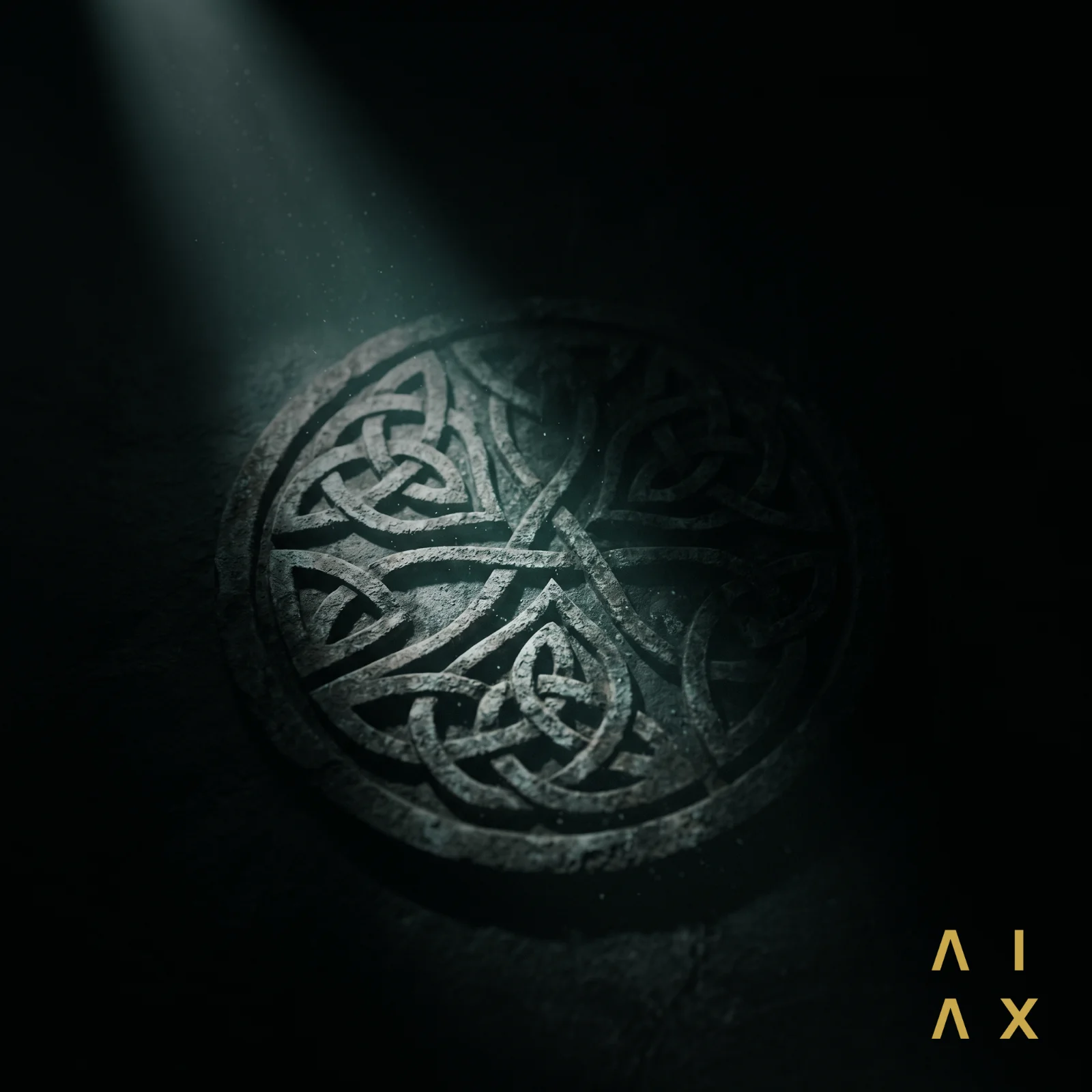
07 / 20 · INTROITUS · LUX
AKT II — VIBRATIO
UNIO
Lydian · 3:14
Plotinus said the soul never stopped being one with the whole. It only forgot. To remember is not to join — it is to stop pretending you ever left.
“φυγὴ μόνου πρὸς μόνον.”
“The flight of the alone to the Alone.”
Every voice in the same key.
Listen on Spotify ↗We were taught that unity is an agreement.
Everyone in the room on the same side of an argument. The couple saying yes. The team in alignment. Unity as a result of work — negotiation, compromise, a vote. This is how the word is used in politics, in business, in relationships. And it is not wrong. It is just small.
Plotinus meant something else. He lived in third-century Alexandria and Rome, wrote in Greek, and spent his entire adult life on one question: what is the relationship between the soul and to hen — the One? Not one thing. Not one group. The One. The source from which everything else descends and to which everything else returns.
He wrote fifty-four essays about it. They were edited after his death by his student Porphyry into six books of nine — the Enneads. The last essay of the last book ends with a sentence that has been quoted for seventeen hundred years: phygē monou pros monon. The flight of the alone to the Alone.
Unity is not agreement. It is the moment you notice the rope between you and something else was never untied.
He meant this literally. Plotinus said he had experienced it four times in his life — moments where the distance between himself and the universe collapsed, and there was no observer left to report on the experience afterwards. He did not describe it as ecstasy. He described it as returning. As if he had been away from somewhere and finally walked back in.
This is where the Latin word unio comes from — unio mystica, the mystical union — and every tradition that followed borrowed the idea. Christian mystics called it union with God. Sufi poets called it fana, the annihilation of the self in the Beloved. Zen called it kenshō. Different words, same experience: the temporary dissolving of the line between you and everything else.
Most of us will never have this experience the way Plotinus described it. But there are smaller versions, and they arrive uninvited. A piece of music that makes you forget you are listening. A walk alone in which you stop being a person walking and become just the walking. A moment in bed with someone when the two of you are not doing anything, and it is enough. These are not unity in miniature. They are the same thing, at lower intensity.
Omnes unum. All one. Not because we decided so. Because we noticed.
UNIO is what it sounds like when every voice on the record finally sings in the same key.
— Plotinus, 204–270 AD
LYRICS
Unio.
Unus.
We are one.

We are one.
Unio.
We are one.
Omnes unum.

Omnes unum.
We are one.

Unio.